
What Is an Automation Score? How to Calculate Your Business's Automation Opportunity
What Is an Automation Score? How to Calculate Your Business's Automation Opportunity
An automation score is a number that estimates how much time, revenue, and manual effort a business could recover by automating repetitive tasks like answering calls, following up on leads, scheduling, and data entry. It is calculated from a short set of inputs, including your industry, team size, current pain points, missed call handling, and weekly hours spent on manual work. The higher the score, the more automation opportunity exists inside your business right now.
If you have ever wondered whether your business is a good fit for automation, or how much time and money you are actually losing to manual processes, an automation opportunity assessment gives you a concrete answer instead of a guess. This article breaks down exactly what goes into the score, how to estimate your own version of it by hand, and how to get a free, personalized report in a few minutes.
What an automation score actually measures
An automation score is not a grade and it is not a judgment on how well your business is run. It is a measurement of gap: the distance between the manual work happening in your business today and the automated version of that same work.
Every business has some mix of repetitive tasks that eat staff time and repetitive delays that cost revenue. A phone that rings and goes to voicemail after hours. A lead who fills out a form and does not hear back for two days. A new customer who has to manually schedule three separate calls just to get onboarded. None of this is unusual. It is just expensive, and most business owners have never actually quantified how expensive.
That is the job of an automation score: turn a fuzzy sense of "we're stretched thin" into a specific, personalized number, backed by an explanation of where the biggest opportunities are.
At Bez Builder, we built a free tool that calculates this automatically. It is called the Automation Score, and it takes about two minutes to complete.
How the Automation Score quiz works
The quiz asks six short questions:
- Your industry. Wellness and spa businesses, real estate agencies, auto dealerships and vehicle service shops, consulting firms, SMMAs, SaaS companies, and more all have different automation opportunities, so the tool tailors its analysis accordingly.
- Your team size. A five-person team and a fifty-person team lose time to manual work very differently.
- Your current pain points. This includes things like repeat questions from customers, scheduling back and forth, chasing leads that have gone cold, manual data entry, sending quotes, and onboarding new clients or customers.
- The tools you currently use. CRM, calendar tools, phone systems, and whatever else your team relies on today.
- How you currently handle missed calls. Voicemail, calling back later, or something you already have set up.
- Roughly how many hours per week your team spends on manual, repetitive work.
After answering, you enter your name and email and get a free, personalized report immediately. That report includes your automation opportunity score, plus a deeper analysis of the automation opportunities specific to your industry.
The factors behind the score, and why higher is better
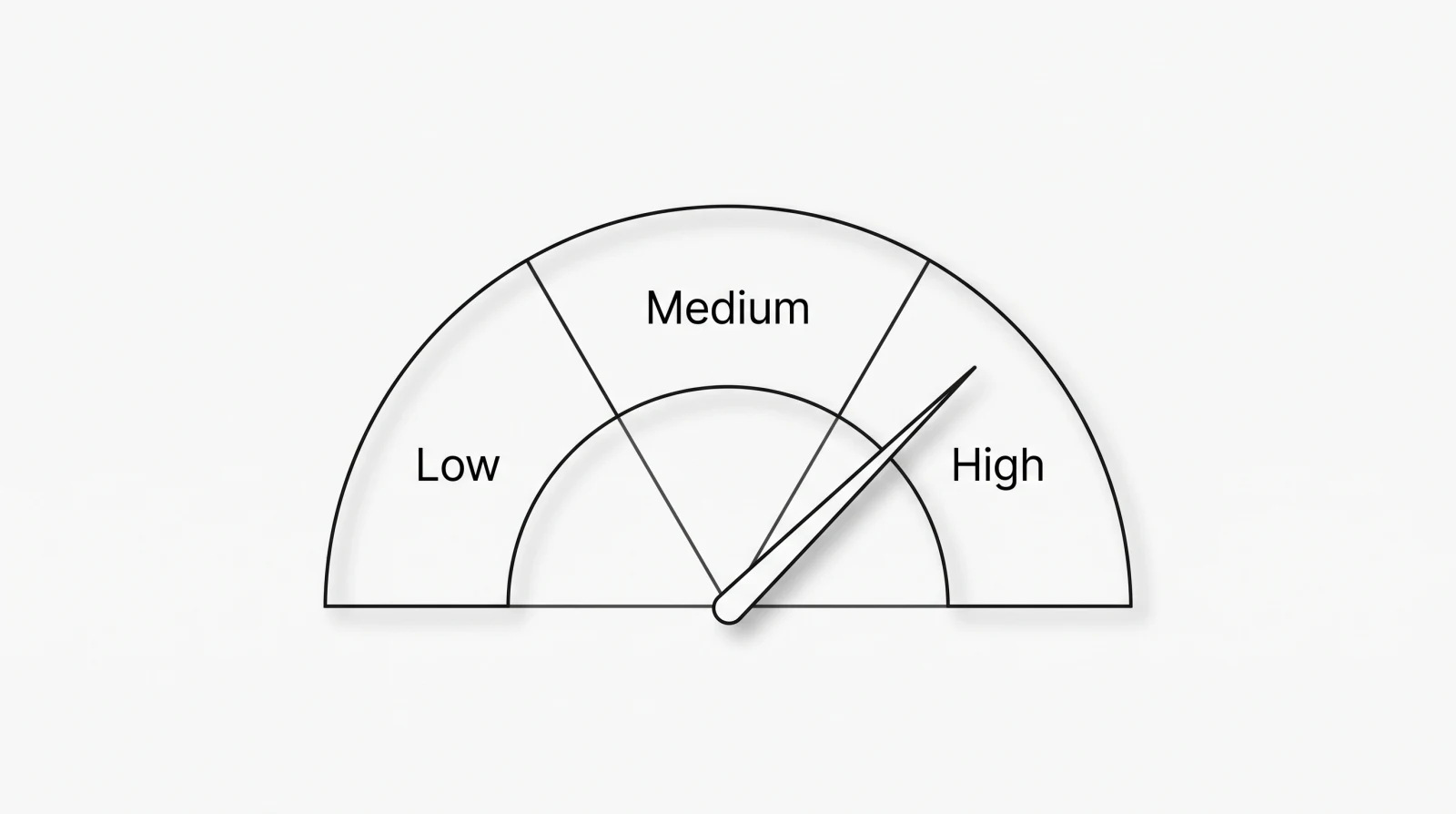
This is the part people get backwards the first time they see it: a higher automation score is a good thing. It does not mean something is wrong with your business. It means there is more upside sitting on the table, waiting to be captured.
Here is how the three main factors work.
Pain points
The more of the common pain points you experience, such as repeat questions, scheduling back and forth, chasing leads, manual data entry, sending quotes, or onboarding new clients, the higher your score climbs. Each pain point represents a repetitive task that an AI agent can typically absorb entirely. Stack several of them together and you are looking at a business where automation is not a nice-to-have, it is a structural fix for hours of work that never needed a human being in the first place.
Missed calls
How you currently handle missed calls is one of the highest-weighted inputs. A call that goes to voicemail is not a neutral event. It is a prospect or existing customer who wanted something right now and did not get it. Some of them call a competitor. Some of them just give up. The more your business relies on voicemail or "we'll call them back later" instead of an always-on system, the higher your score, because that gap represents real, recoverable revenue.
Manual hours per week
The number of hours your team spends on manual, repetitive work each week is the most direct input into the score. Hours are a resource. Every hour spent manually entering data, chasing a lead through five follow-up texts, or answering the same scheduling question is an hour not spent selling, serving customers, or growing the business. The more hours you report, the higher your score, because that is a bigger block of time that automation can hand back to your team.
Put together, these three factors give you a single number that reflects real, recoverable capacity: time your team could reclaim, and revenue your business is currently leaving on the table.
How to manually estimate your own automation opportunity
You do not need the quiz to get a rough sense of where you stand. Here is the back-of-napkin version of what the Automation Score calculates for you automatically, and far more precisely.
Step 1: Estimate the cost of manual hours
Start with how many hours per week your team spends on manual, repetitive tasks: answering the same questions, manually scheduling appointments, entering data by hand, chasing leads, writing the same follow-up messages.
Multiply that number by an hourly value for your team's time. A simple way to do this is to use a blended hourly rate (wages plus overhead) or, if that work is currently keeping someone from selling or serving customers, use the value of what they would otherwise be doing.
Weekly manual hours x hourly value = weekly cost of manual work.
Multiply that weekly figure by 52 and you have a rough annual cost, before you have accounted for a single missed call.
Step 2: Estimate the cost of missed calls and slow follow-up
This is where most business automation audits underestimate the real number, because missed calls and slow follow-up do not show up on a P&L line item. They just show up as lower revenue with no obvious cause.
A rough way to estimate it:
- Estimate how many calls or inquiries go unanswered or unreturned in a typical week.
- Estimate what percentage of those would have converted into a customer if answered immediately.
- Multiply by your average customer value.
Missed opportunities per week x conversion rate x average customer value = weekly cost of missed calls.
Again, multiply by 52 for a rough annual figure.
Step 3: Add them together
Add the annual cost of manual hours to the annual cost of missed calls and slow follow-up. That combined number is a reasonable, if rough, estimate of what manual operations are currently costing your business every year, and it is a fair proxy for how much automation could put back.
The catch with doing this by hand is that it is generic. It does not account for your specific industry, the tools you already have in place, or which pain points are actually costing you the most. That is exactly the gap the free quiz closes: it asks the right questions, weights them properly, and hands you a personalized report instead of a napkin estimate. Take the Automation Score to see your real number instead of guessing.
Why this matters more than it looks like it does
A lot of business owners intuitively know they are losing time and money to manual processes. Far fewer have ever put a number on it. Without a number, automation stays a vague someday project. With a number, it becomes a business decision with a clear return.
This is also why an automation opportunity assessment is a better starting point than jumping straight into buying software or hiring another employee to handle the overflow. It tells you where the leaks actually are before you spend money trying to patch them. Some businesses are losing the most to missed calls. Others are losing the most to slow onboarding or manual data entry. The quiz's industry-specific analysis is built to surface the difference.
If you want to go deeper on what automation can actually replace day to day, from answering calls and texts to booking appointments and following up on leads, see our AI agents, or read why AI agents are becoming the default instead of hiring for repetitive roles.
Frequently asked questions
Is the Automation Score quiz free?
Yes. The Automation Score is a completely free tool. It takes about two minutes to complete and you get your personalized report immediately after entering your name and email.
What happens after I take the quiz?
You receive a free, personalized report that includes your automation opportunity score along with a deeper analysis of automation opportunities specific to your industry. There is no obligation attached to getting your results.
Does a high automation score mean my business is doing something wrong?
No. A high score means there is more upside available from automating, not that your business is being run poorly. The businesses with the highest scores are often simply growing fast enough that manual processes have not kept up.
How is the automation score different from just guessing?
The quiz asks specific, weighted questions about your pain points, missed call handling, and manual hours, then applies an industry-specific analysis to those answers. That produces a more accurate, personalized number than a rough manual estimate can.
How long does the quiz take?
About two minutes. It is six short questions followed by your name and email to receive your report.
Can I get an automation opportunity assessment without automating everything at once?
Yes. The quiz and report are informational and free, with no commitment. If you decide automation makes sense afterward, you can book a call to discuss what a system built for your business would look like, or see pricing to understand what plans typically cost.
Get your number
You already have a sense that manual work is costing your business time and money. The Automation Score turns that sense into an actual number, backed by a personalized report built for your industry. It takes about two minutes, it is completely free, and there is no obligation. Take the Automation Score now and find out exactly how much opportunity is sitting inside your business. If you have questions first, contact us and we will point you in the right direction.