
SaaS Customer Onboarding Automation: How AI Agents Reduce Churn
SaaS Customer Onboarding Automation: How AI Agents Reduce Churn
SaaS onboarding automation uses AI agents to trigger personalized setup sequences based on real usage data, answer repetitive support questions instantly, and flag at-risk accounts before they churn. Most SaaS companies lose the majority of at-risk customers in the first 30 to 90 days, not because the product is weak, but because onboarding is manual and doesn't scale. AI agents fix that by replacing inconsistent human follow-up with a system that responds the moment a user needs it.
The real reason SaaS companies lose new users
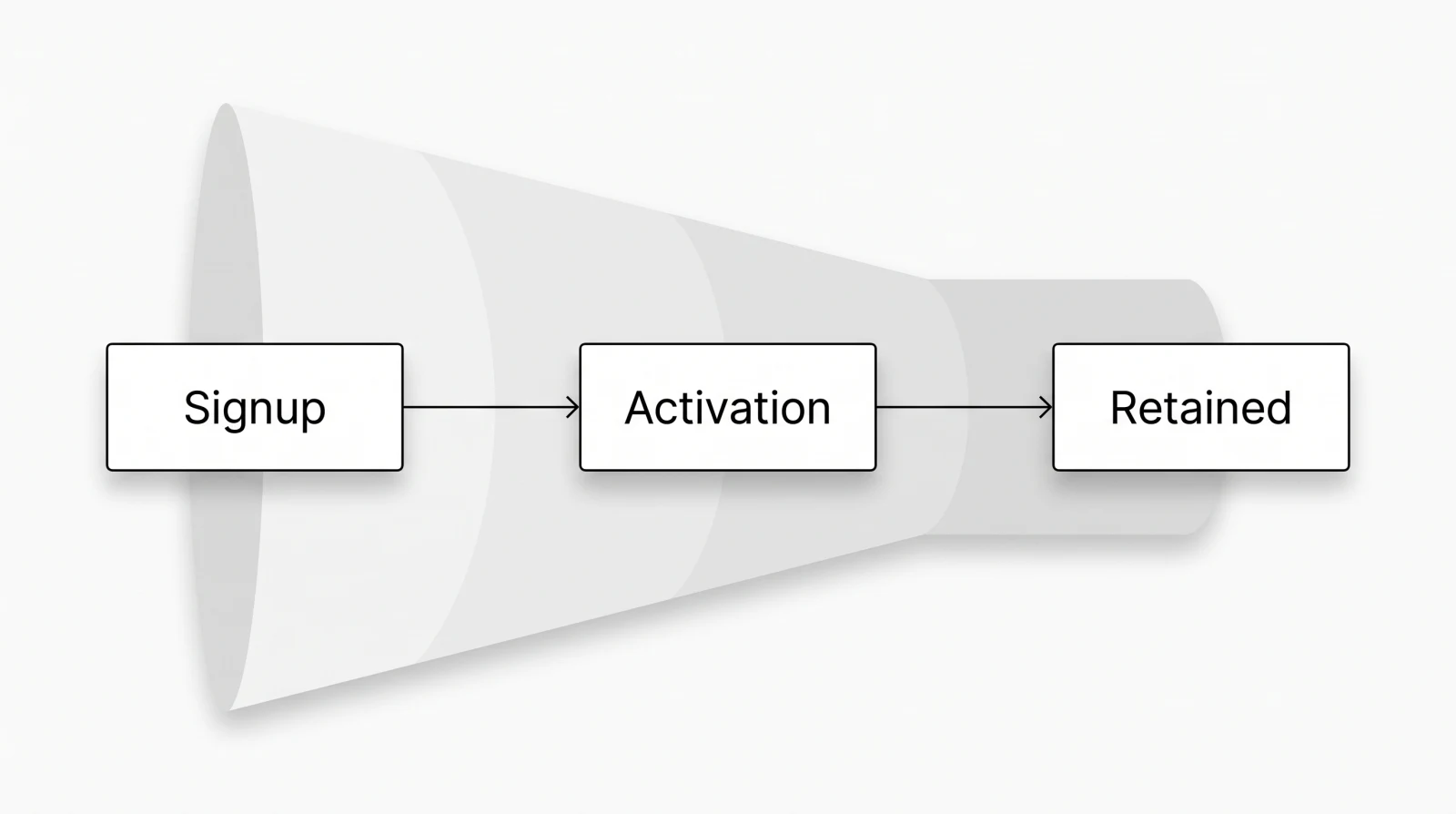
Churn doesn't happen evenly across a customer's lifecycle. It clusters hard in the first few weeks. A user signs up, gets a generic welcome email, maybe books a setup call if you're lucky, and then goes quiet. If they don't reach an "aha moment" fast, they drift. By the time a renewal date or a support escalation puts them back on your radar, the relationship is already over in their head.
Three things drive this pattern:
- Activation takes too long. New users need to hit a specific value milestone (their first successful workflow, their first report, their first integration) within days, not weeks. Every day without that milestone increases the odds they churn silently.
- Manual onboarding doesn't scale with headcount flat. A customer success team that can personally walk 50 new signups through setup each month cannot do the same for 500 without hiring, and hiring doesn't happen at the pace signups grow. So onboarding quality degrades exactly when it matters most.
- Support gets buried in repetitive tier-1 tickets. "How do I reset my password." "Where do I find my API key." "How do I invite a teammate." These questions eat hours that should go toward proactive, high-value customer success work, but instead go toward answering the same five questions on a loop.
The result is a growth trap: the better your top-of-funnel performs, the worse your onboarding experience gets, because the team answering questions and nudging activation stays the same size while the user base grows. That's the core problem SaaS growth automation is meant to solve.
What an AI agent does differently
A human-run onboarding process reacts to a calendar: day 1 email, day 7 check-in, day 30 renewal risk review. An AI agent reacts to behavior, in real time, for every single user at once. That distinction is the entire point of SaaS onboarding automation.
Personalized onboarding sequences triggered by usage, not by the calendar
Instead of a static drip campaign, the agent watches what a user actually does inside the product. If someone signs up but never completes their profile, the agent nudges them toward that specific step, not a generic "getting started" email. If a user finishes setup but hasn't invited a teammate (a strong activation signal for many SaaS products), the agent prompts that action specifically. Onboarding becomes a response to real behavior instead of a one-size-fits-all sequence that ignores where each user actually is.
Instant answers to repetitive support questions, day or night
A large share of tier-1 tickets are questions the product documentation already answers, if the user could find it. An AI agent trained on your product answers these instantly, at 2am or during a Monday morning spike, without a human touching the ticket. That does two things at once: users get unblocked in seconds instead of waiting hours for a reply, and your support team gets their time back for the tickets that actually need a human (churn-risk conversations, complex bugs, enterprise accounts).
This is what AI customer support for SaaS actually looks like in practice: not a chatbot that deflects with canned responses, but an agent that resolves the question and updates the record.
Proactive outreach to users showing early churn signals
Most churn is predictable before it happens. A drop in login frequency, a feature the user relied on that they've stopped touching, a support ticket that never got a satisfying resolution: these are all signals sitting in your product analytics and CRM right now, usually unused because nobody has time to monitor them account by account. An AI agent can watch for these signals continuously and trigger outreach automatically, whether that's a check-in message, a resource pointing to the feature they stopped using, or a flag to a human rep for a higher-touch save. Catching the signal in week two is far cheaper than trying to win the account back after cancellation.
Automatic CRM and analytics updates
Every onboarding interaction, every resolved ticket, every usage milestone should update your CRM and reporting automatically. When this is manual, records go stale and customer success reps make decisions on outdated information. An AI agent logs this in real time, so your team always has an accurate picture of account health without anyone doing manual data entry.
Reduce SaaS churn with automation: the ROI math
SaaS founders don't need to be convinced that churn is expensive. They need a simple way to decide if automation is worth the monthly cost. The math is straightforward.
Take the lifetime value (LTV) of one retained customer. For most B2B SaaS products, that's meaningfully more than a single month of subscription revenue, often the equivalent of a year or more once expansion revenue and reduced acquisition cost are factored in. Now compare that to the monthly cost of an automation system.
If retaining even one or two additional customers per month covers the entire cost of the automation, and the onboarding sequences plus proactive outreach are working across your full user base rather than a small slice a human team could reach, the math tends to favor automation quickly. Add in the hours support reps get back from not answering repetitive tickets, hours that can go toward upsells, expansion conversations, or higher-value account work, and the return compounds.
The honest way to evaluate this: don't just ask "what does this cost per month." Ask "what is our current first-90-day churn rate, what would a 10 to 20 percent improvement in early activation be worth in retained LTV, and does the automation cost fall well under that number." For most SaaS companies with a meaningful user base, it does.
What this looks like built for your product
Bez Builder builds these systems specifically for SaaS teams: onboarding sequences tied to your actual product events, support agents trained on your documentation and common tickets, churn-signal monitoring wired into your existing CRM and analytics stack. Systems go live in about two weeks, not a multi-quarter integration project, and Bez Builder has built these for SaaS companies alongside wellness businesses, real estate agencies, and other service-based teams that share the same underlying problem: too much manual, repetitive work sitting between a lead and a retained customer. Learn more about automation for SaaS or see our AI agents for a broader look at what's possible.
Frequently asked questions
What is SaaS onboarding automation?
SaaS onboarding automation uses software, often an AI agent, to guide new users toward activation based on their real behavior inside the product, rather than relying on a human team to manually email, call, or check in with every signup.
How does AI reduce churn for SaaS companies?
AI agents reduce churn by speeding up time to activation, resolving support questions instantly instead of making users wait, and flagging early churn signals like dropping usage so a team can intervene before the account is lost.
Is AI customer support good enough to replace a human team for SaaS?
AI customer support handles repetitive tier-1 questions instantly and consistently, freeing your human team to focus on complex issues, escalations, and high-value account conversations. It's best used to extend your team's capacity, not eliminate the need for humans on hard problems.
How fast can a SaaS company implement onboarding automation?
With a done-for-you provider like Bez Builder, systems typically go live in about two weeks, since the agent is built around your existing product events, documentation, and CRM rather than requiring a long internal build.
What's a reasonable way to estimate ROI on onboarding automation?
Compare the lifetime value of one retained customer to the monthly cost of the automation. If retaining a small number of additional accounts per month covers the cost, and support hours freed up add further value, the ROI case is usually strong for growing SaaS companies.
Does onboarding automation work for early-stage SaaS companies with a small user base?
Yes. Even a small user base benefits because manual onboarding quality is inconsistent from day one, and building automated sequences early prevents the churn problem from compounding as signups grow.
If your new users are churning before they ever really see your product's value, that's a solvable problem, not a fact of life. Take the Automation Score to see exactly how much revenue and time your team is currently leaving on the table, or book a call to talk through what an onboarding and support automation system would look like for your product.