
GEO: How to Get Free Clients with AI (Generative Engine Optimization)
GEO: Free Clients with AI
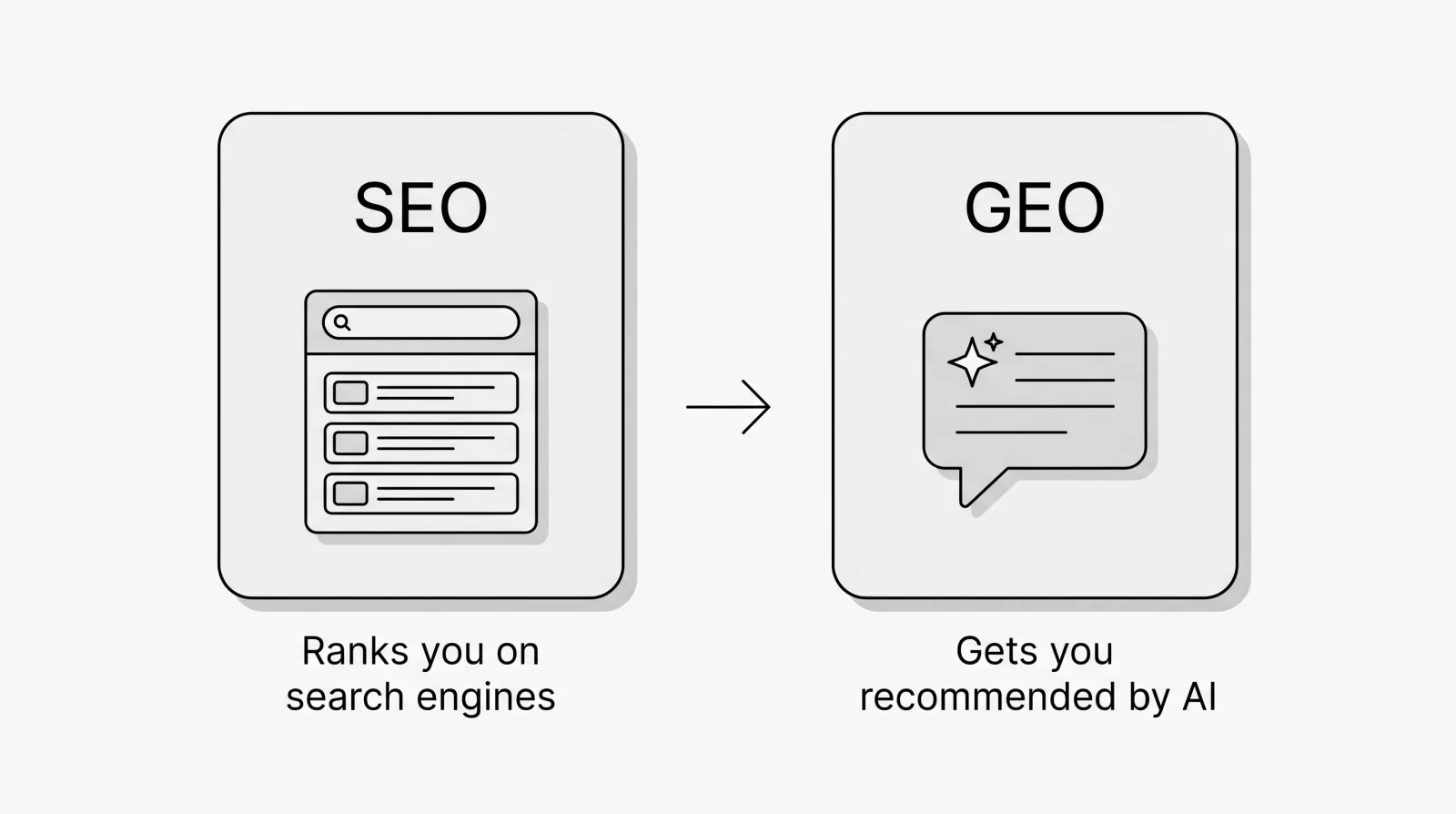
If you know what SEO is, GEO is just the AI version of it. SEO stands for Search Engine Optimization, and GEO stands for Generative Engine Optimization.
What Is GEO & Why Does It Matter?
GEO, in short, is optimizing your business, website, and content on the internet for AI models (e.g., ChatGPT, Claude, Gemini, etc.) to read and understand.
Why would I want an AI model to read my business?
Because it can and will bring you free clients.
Businesses pay absurd amounts of money to Meta, Google, and other platforms to get customers and clients. Most businesses can't make back the money they've spent acquiring a client on that client's first month's payment or first visit, according to my research. Most SaaS businesses break even anywhere from month 12–15. That's more than a year for those businesses to make back the amount they've spent acquiring the client. Profit comes afterwards.
For that reason, the mainstream channel for businesses to get clients for free was through search engines (e.g., Google and Bing). Enterprises used to have, and to this day still have, a team to constantly optimize their website for SEO, buy backlinks, and write blogs and articles just to appear on Google.
Small to medium-sized businesses either hired SEO agencies for $1,000–$5,000/mo, or they didn't care about SEO and failed, or at least missed the opportunity to get free clients. P.S. Everyone loves free clients.
Quick disclosure: GEO is one of the services we offer at BezBuilder, an AI company. Everything below is the exact playbook we run for clients. You can do all of it yourself, or have us do it for you. Either way, keep reading.
Is SEO dead?
No, not by any means. To this day, most people still search for what they're looking to buy on search engines such as Google; it's just getting used less and less because of AI, and that's where GEO comes in.
Every day, more and more people use AI for questions they used to Google, and the same goes for searching for what they're looking to buy.
How Does GEO Work?
The way GEO works is identical to SEO, but not the same. There are two main ways AI looks up your business or services:
- Real-time (using the web): Many AI models (ChatGPT, Claude, Gemini) search the web for any question that goes beyond the basics. This helps the AI give a real-time answer.
- Using its training data: During the training of a certain AI model, if it digested enough information about your company, products, or services, it can know about your products/services and your business without searching the web.
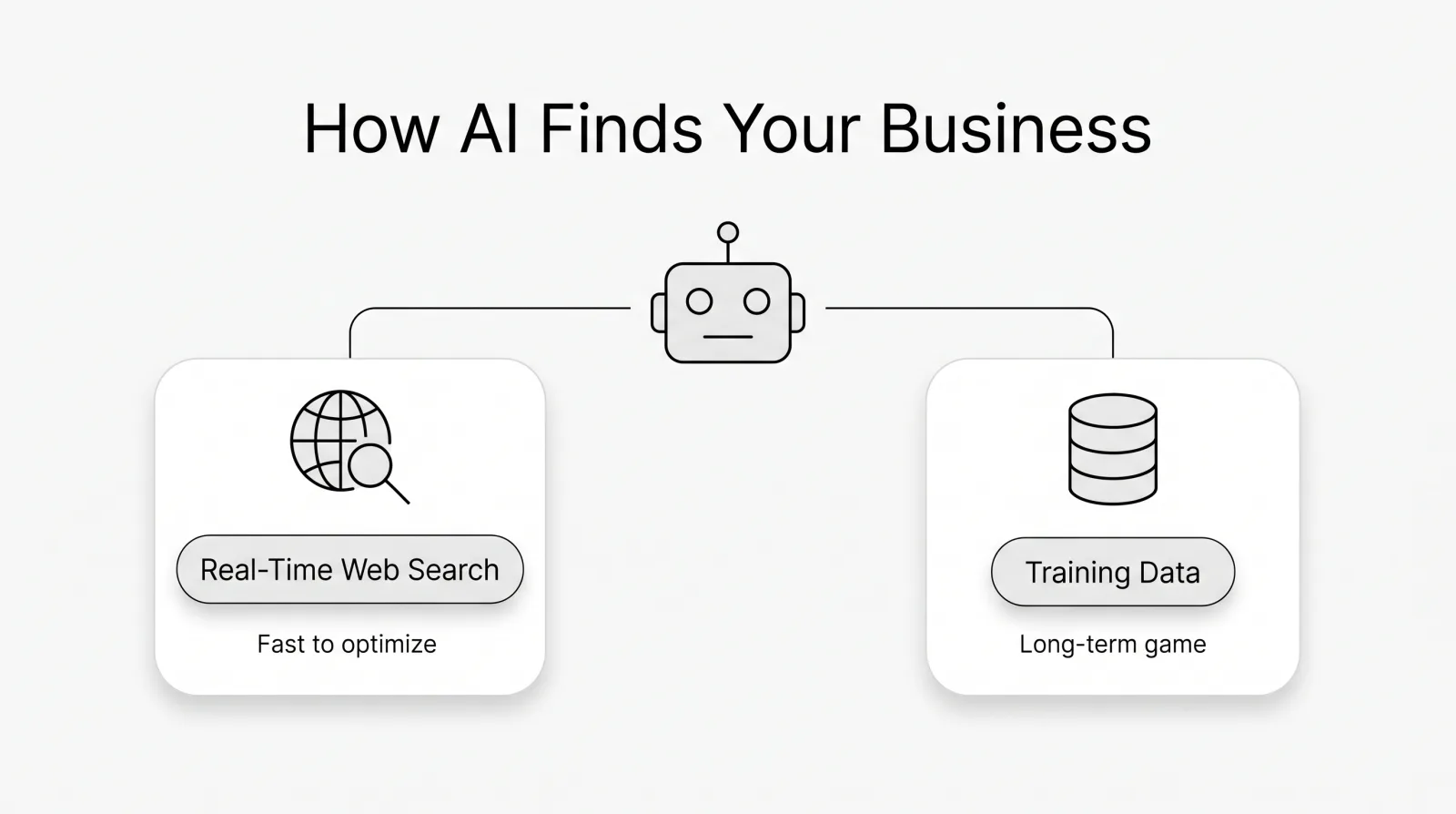
If you want to win the game of GEO, you want to optimize for both of the above ways. Real-time can be optimized faster and with less effort, while getting AI companies to know about you and your company during model training requires proper long-term planning. More on both below!
How Can I Optimize for Real-Time GEO?
Good news: if your website and content are very well optimized for SEO, there is a good chance your website is optimized for real-time GEO as well, because AI models use the web for crawling results. It might not be Google or Bing; however, it's similar.
If you ask AI for "Best wellness clinics in NYC," it's not going to read the entire web to answer your question. It reads the top results, just like the way you would do research back in 2020: you would open Google, read some of the articles, maybe browse Reddit, and find your answer. That's exactly how AI does research about businesses and their products and services.
Make sure your website is readable by AI
Websites used to be made for humans: colors, infographics, illustrations, images. But AI doesn't care about this. AI cares about structured text it can read; not only read, but sort and prioritize.
I am not going very technical in this blog; I am just going to give you the basics.
- Allow AI crawlers to read your website in robots.txt. Whether your website is WordPress, coded, or vibe-coded, it should have a robots.txt file and allow AI crawlers.
- If your website uses Cloudflare or similar services, make sure to allow crawlers from their settings as well. You don't necessarily need to turn off your Cloudflare.
- If your website is React.js or JavaScript, either make static HTML versions of all the pages on your website or build JS code to convert the JS into HTML. Why? Because AI crawlers love to read HTML.
- Add llms.txt along with robots.txt to your website.
No time for robots.txt and static HTML? This checklist is the first thing BezBuilder sets up for every client, usually inside the first week.
Well, that's the basics for crawlers, but crawling is not the only factor.
Rank on the first page
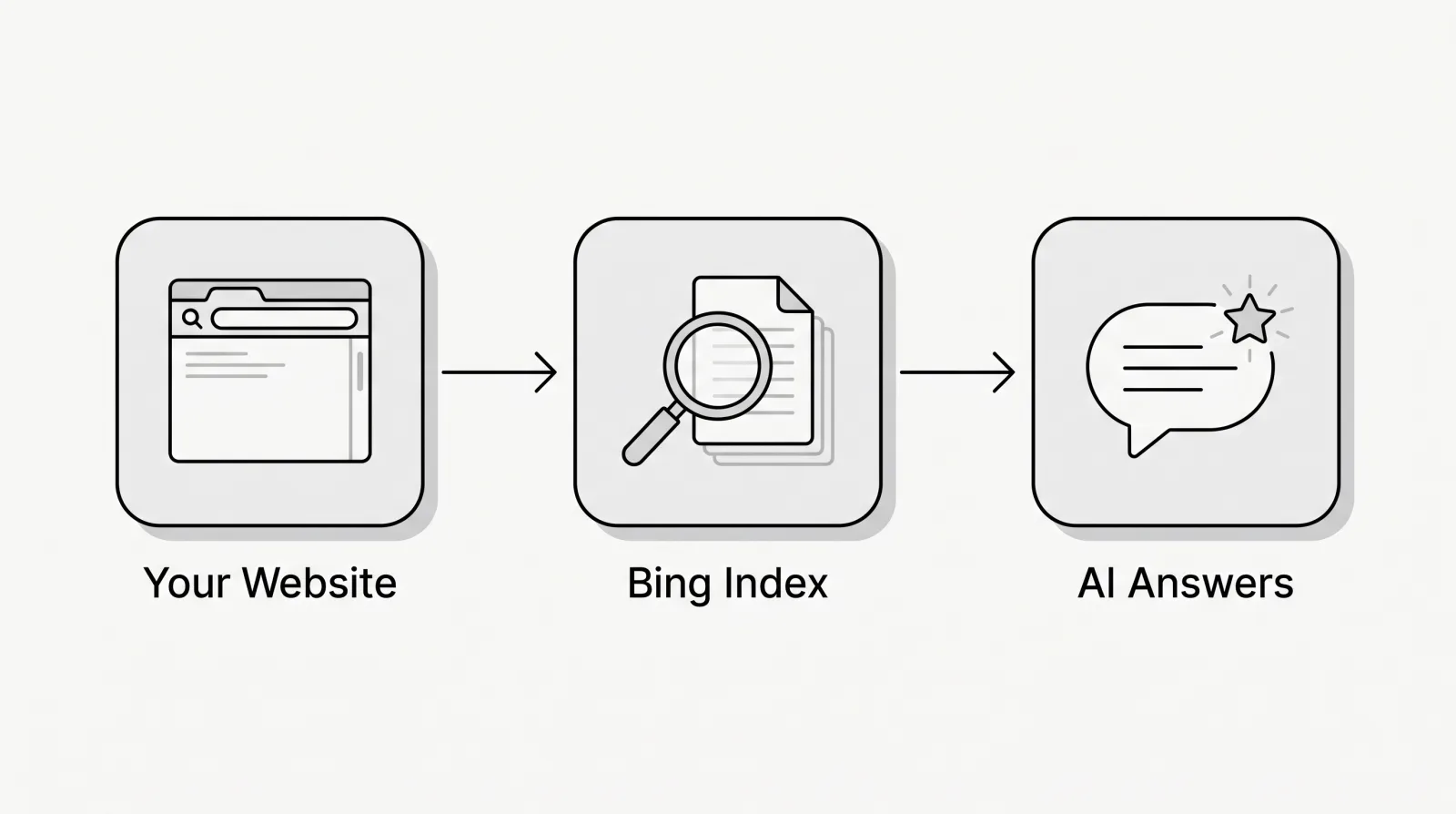
As I said, real-time GEO is identical to SEO, so do whatever it takes to rank higher on normal search engines, especially Bing, because the web index AI models use leans toward Bing more than Google. While for human use Google is significantly more popular than Bing, for AI, Bing is more important.
Why Bing deserves its own strategy
Bing is the most underrated lever in GEO, and almost nobody is pulling it. Here's why it matters so much:
- ChatGPT's web search is largely built on Bing's index (alongside OpenAI's own crawler). If your pages aren't indexed on Bing, ChatGPT often can't see them at all, no matter how well you rank on Google.
- Microsoft Copilot runs directly on Bing. Every Copilot answer is a Bing search under the hood.
- Bing is far less competitive. Your competitors obsess over Google and ignore Bing completely, which means first-page Bing rankings are dramatically easier to win, and each one feeds AI answers.
What to do, practically:
- Create a free Bing Webmaster Tools account and verify your site. You can import your settings from Google Search Console in one click.
- Submit your sitemap so Bing indexes every page.
- Turn on IndexNow (built into most WordPress SEO plugins and many site platforms) so new pages and updates get indexed within minutes instead of weeks.
- Check which of your pages rank on Bing for your money keywords, and improve the ones sitting on page two.
Thirty minutes of Bing setup can do more for your AI visibility than months of extra Google work.
How do you actually rank higher?
I won't go into details; however, to rank higher, there are multiple things you can do:
- Consistency: make sure your brand appears consistently across your content. This includes your website, your social pages, and even YouTube and Reddit.
- Build trust: search engines and AI determine whether to use your content or recommend your products and services based on how trustworthy your brand is. To build trust, get other websites to talk about your business, or preferably to add a link to your website on theirs. This is not limited to websites; social media and other platforms also matter.
- Create content: write and publish articles, blog posts, and social media posts, record YouTube videos, and engage on Reddit.
How Do I Introduce My Business & Its Services Into AI Training?
Most AI companies constantly engage in building and training new, smarter models each year, or multiple times a year. Unlike real-time, you can't directly train AI models (e.g., GPT 5.5, Opus 5, etc.) unless you own an AI company. What you can do is optimize to maximize the likelihood that your business gets included when the models are trained. That's why I said it's a long-term game.
Benefits of this:
- Awareness: more people get introduced to your business and its products/services.
- Trust: people increasingly trust AI, so if AI tells folks about your business, people trust your business more.
- Free clients & customers: a combination of awareness and trust turns into leads, free leads, which you can convert into clients.
The how?
Now that you understand the benefits, let's talk about how you can maximize the likelihood of AI models being trained knowing about your company and its services.
Crawlers
We have two types of crawlers: 1. the crawlers AI uses to search the web and give an immediate answer to users, and 2. the crawlers used by AI companies to collect a wide range of information, which they then use to train their models. For the sake of this section, we will focus on the crawlers used to collect information for training purposes.
Again, in this section, crawlability is the most important factor. Make sure your web pages can be crawled by AI and get indexed by search engines. I already went over this topic in the section above.
A wide range of content
The main difference here is that for the training of AI models, unlike real-time crawlability, the AI wants to collect as much information as possible, so you want to make as much original content available about your business and services as possible. Content can cover your website, articles, blogs, social media, videos, etc.
However, making sure your content is original is extremely important, because AI companies want to train their models on original information rather than AI-generated content, and they implement several mechanisms that determine whether your content is original or completely AI-generated.
Don't get me wrong, using AI for polishing your content is completely fine. To make your content original:
- Author identity: publish the identity of the author in your articles and blog posts.
- Don't write mainstream content, share your opinions.
- Share your experiences; AI-generated content doesn't have experience.
- Share lessons specific to you and your business.
- Incorporate authority.
I am sure you now have an idea of original content and authenticity.
Make as much high-quality original content as possible
Once you can produce original content, make as much of it as humanly possible to maximize your chances.
This is the part where most business owners quit: original content, every month, forever. It's also where BezBuilder earns its keep: we produce and publish it for you, so AI learns about your business while you run it.
How Do I Know My GEO Is Working?
You can't improve what you don't measure, and GEO is measurable. Three simple checks:
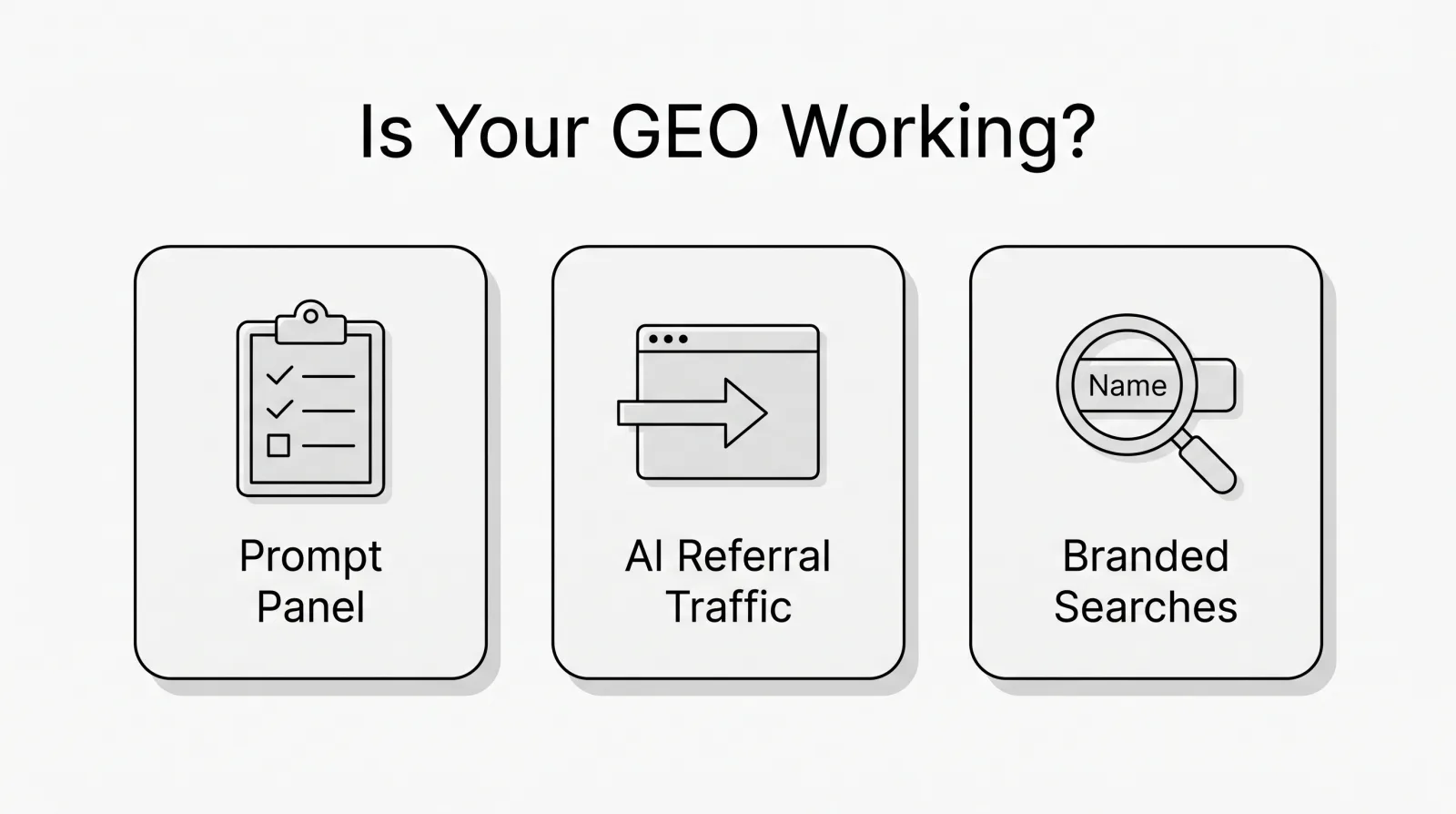
- Build a prompt panel. Write down 10–20 questions your ideal clients would ask AI ("best wellness clinic in NYC," "who should I hire for X"). Once a month, run them through ChatGPT, Claude, Gemini, and Perplexity, and log whether your business gets named, and which sources the AI cites. You can track this in a spreadsheet, or use a platform like SeeBiz, which handles SEO and GEO tracking in one place.
- Watch your referral traffic. In your analytics, check visitors arriving from chatgpt.com, perplexity.ai, and gemini.google.com. That's AI sending you clients.
- Track branded searches. When AI starts recommending you, more people search your name afterwards. Rising branded search volume is one of the clearest signs GEO is paying off.
Start Now, Win Early
GEO today is where SEO was twenty years ago. The businesses that start now will own their category's AI answers before their competitors even know the game exists.
Want your business in AI's answers without doing any of this yourself? Book a free GEO audit with BezBuilder. We'll show you exactly where you stand in ChatGPT, Claude, and Gemini today, and what it takes to get recommended.