
AI Automation for Consulting Firms: Automate Scheduling, Onboarding, and Follow Up
AI Automation for Consulting Firms: Automate Scheduling, Onboarding, and Follow Up
Consulting firm automation uses AI agents to handle discovery call scheduling, client onboarding paperwork, and proposal follow up automatically, so consultants spend more hours billing and fewer hours on admin. The result is faster response times, more consistent onboarding, and fewer deals that quietly go cold. This guide breaks down where the time actually goes and what to automate first.
The real cost of running a consulting firm on manual admin
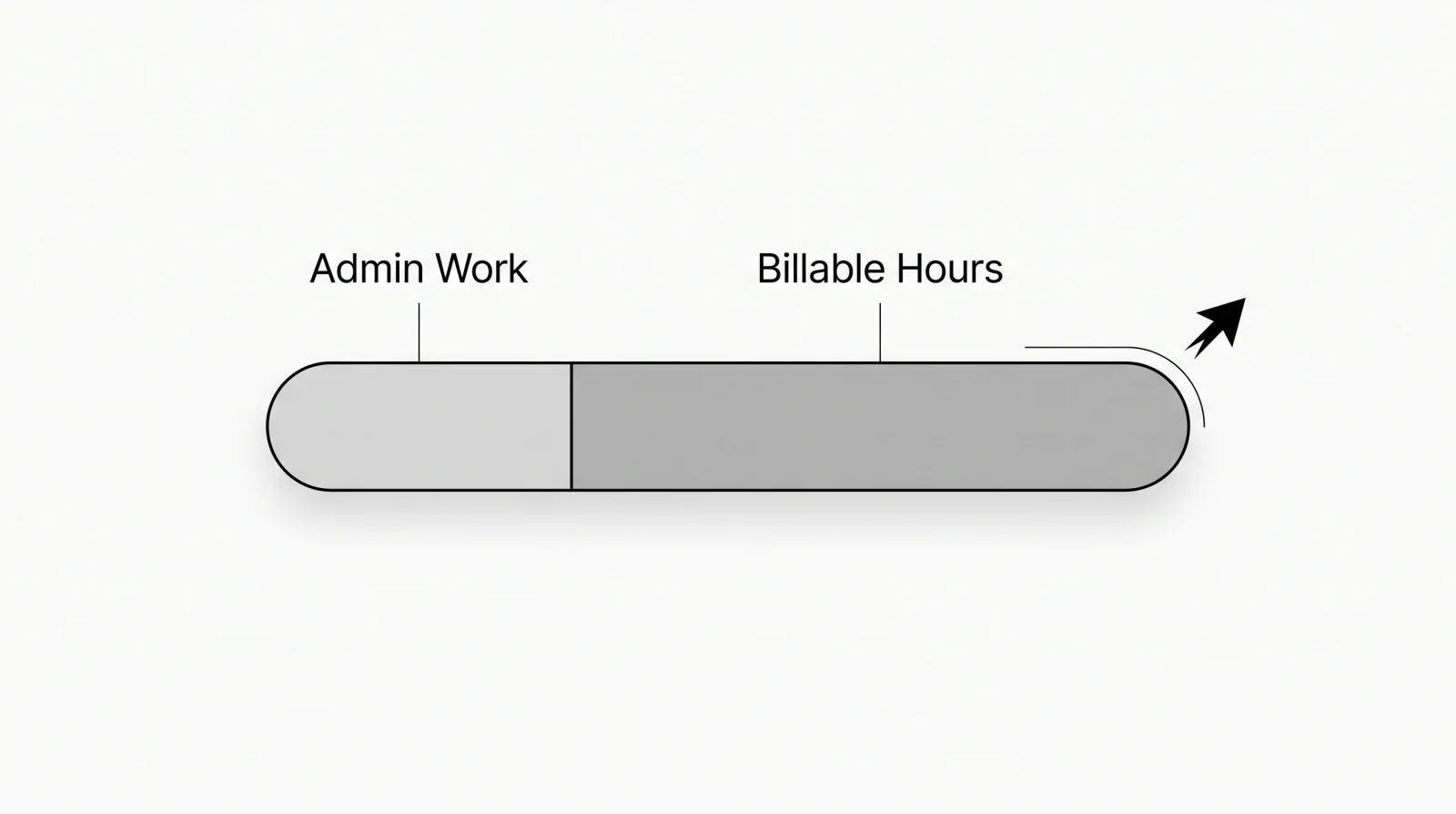
Consulting is a time business. You sell hours, expertise, and outcomes. Every hour spent on scheduling, chasing signatures, or re-explaining onboarding steps is an hour you cannot bill. It does not show up as a line item on your P&L, but it is real cost.
Think about a typical week at a small or mid-size consulting firm:
- A prospect fills out a contact form, and nobody replies for six hours because the partner who owns intake was in back-to-back client meetings.
- A discovery call gets booked by email, with three rounds of "does Tuesday at 2pm work" before a time actually sticks.
- A signed engagement sits in an inbox while the client waits for an intake form, a contract, and a kickoff date.
- A proposal goes out, gets a polite "looks great, let us review internally," and then silence, because nobody has a system to follow up on day 3, day 7, and day 14.
None of this is a strategy problem. It is a workflow problem. And workflow problems compound: a firm billing at $250 to $500 an hour that loses even 5 hours a week to scheduling and chasing paperwork is leaving $1,250 to $2,500 a week on the table, every week, whether or not anyone notices.
Why AI for consulting businesses is different from a bigger to-do list
Most consulting firms already have tools: a calendar link, a CRM, maybe a proposal platform. The problem is not a lack of tools. It is that a human still has to notice, decide, and act at every step. AI for consulting businesses closes that gap. Instead of software that waits for someone to open it, an AI agent works the process in the background and only pulls a human in when a decision actually needs a human.
Concretely, this looks like:
- Qualifying and booking discovery calls automatically. When a lead comes in through a form, email, or ad, the agent responds in minutes, asks a few qualifying questions, and books the call directly on the right consultant's calendar, no back and forth required.
- Sending and tracking intake forms and contracts. Once a deal closes, the agent sends the intake questionnaire and contract, reminds the client if they have not completed it in 48 hours, and flags the file as ready the moment everything is signed.
- Following up on stalled proposals on a schedule. If a proposal has not gotten a response, the agent sends a scheduled, personalized nudge at set intervals instead of relying on a partner to remember to check.
- Keeping the CRM updated without manual entry. Every call booked, form completed, and email exchanged gets logged automatically, so pipeline reporting is accurate without someone doing data entry on a Friday afternoon.
None of this replaces the consultant. It replaces the parts of the job that were never actually consulting to begin with.
Client onboarding automation: the highest-leverage place to start
If you automate one thing first, make it onboarding. It is the part of the client relationship where manual process does the most damage, because it is the client's first real experience of working with your firm.
A manual onboarding sequence typically looks like this: send an intake form by email, wait, follow up, receive it back incomplete, ask for the missing pieces, draft and send a contract, wait for signature, chase again, then finally schedule a kickoff call once everything is in. That can take a week or two of back and forth for what should be a same-day process.
Client onboarding automation collapses that sequence:
- The moment a deal is marked closed, the agent triggers the intake form and contract automatically.
- Reminders go out on a fixed schedule until both are complete, no manual follow-up required.
- As soon as everything is signed, the agent offers kickoff call times and books the meeting.
- The consultant gets a summary and a calendar invite, fully prepared, without having chased a single document.
The consistency matters as much as the speed. Every client gets the same clean, professional onboarding experience, regardless of how busy the team is that week. That consistency is part of what a client is paying for when they hire a firm instead of a freelancer.
Consulting firm workflow automation beyond onboarding
Onboarding is the clearest starting point, but consulting firm workflow automation extends across the whole client lifecycle.
Lead response and qualification
Response speed is a competitive advantage in consulting. A prospect comparing three firms will often go with whoever responds first and sounds most organized. An AI agent responds instantly, asks the right qualifying questions (budget range, timeline, scope), and routes serious leads straight to a booked call.
Proposal follow-up
Most lost proposals are not lost on price or fit. They are lost on silence. A prospect gets busy, the proposal slips down their inbox, and a competitor who followed up wins the deal instead. An automated follow-up sequence, spaced out over two to three weeks, keeps your firm top of mind without a partner having to remember to send a check-in email.
Recurring reporting and check-ins
For retainer or ongoing engagements, agents can generate and send recurring status reports, schedule quarterly business reviews, and flag when a client has gone quiet, which is often an early warning sign of churn.
Internal handoffs
When a deal moves from sales to delivery, or from one consultant to another, the agent can pass along the full context automatically, notes, intake answers, and contract terms included, so nothing gets lost in translation.
How to think about ROI
The math on consulting firm automation is straightforward, and it holds up whether you are a solo consultant or a 20-person firm.
Start with two numbers:
- The value of one recovered billable hour. If your average bill rate is $200 to $500 an hour, recovering even 3 to 5 hours a week of admin time is worth $2,400 to $10,000 a month in billable capacity, whether that time gets rebilled or reinvested into business development.
- The value of one closed engagement. If faster response times and consistent follow-up help you close even one additional engagement a quarter that would have otherwise gone cold, that alone often covers a year of automation costs.
Plans for done-for-you AI automation typically start in the range of $1,000 a month, custom-priced based on scope. Compare that to the cost of a single lost proposal or a partner spending an afternoon chasing intake forms, and the math is not close. See pricing for how this breaks down for firms your size.
What to automate first
If you are not sure where to begin, prioritize in this order:
- Lead response and discovery call booking, because speed to lead has the most direct impact on close rate.
- Client onboarding, because it is the highest-friction manual process and the one clients notice most.
- Proposal follow-up, because it recovers deals that are otherwise silently lost.
- CRM hygiene and reporting, because it compounds the value of everything above by keeping your pipeline data trustworthy.
You do not need to automate everything at once. Most firms see the clearest wins by starting with one workflow, proving it out, and expanding from there. Our AI agents are built to plug into the tools you already use, not replace them.
Frequently asked questions
What does AI automation actually replace for a consulting firm?
It replaces the manual, repeatable admin work around client acquisition and onboarding: scheduling, sending and tracking forms and contracts, and follow-up messaging. It does not replace consulting judgment, strategy, or client relationships.
Is this only for large consulting firms?
No. Solo consultants and small firms often see the fastest relative impact, since a single missed follow-up or slow onboarding step has an outsized effect when there is no dedicated operations staff to catch it.
How long does it take to get an automation like this live?
A done-for-you setup typically goes live in about 2 weeks, covering the qualifying questions, intake flow, and follow-up schedule specific to how your firm actually works.
Will an AI agent sound robotic to my clients and prospects?
No, when built correctly. The agent is trained on your firm's tone, services, and typical questions, so responses read as a natural extension of your team rather than a generic bot.
What tools does this need to integrate with?
Most setups connect directly to the calendar, CRM, and contract or e-signature tools you already use, so there is no need to switch platforms to get the automation running.
How do I know how much this would save my firm specifically?
The clearest way is to look at your own numbers: hours spent per week on scheduling and chasing paperwork, and how many proposals go quiet without a fast follow-up. A free personalized report can size that opportunity for you.
See where your firm stands
If scheduling, onboarding, and proposal follow-up are quietly eating your billable hours, it is worth putting a number on it. Take the Automation Score for a free, personalized report on how many hours and how much revenue your firm could recover by automating this work, then book a call to talk through what it would look like for your team.