
AI Automation for Auto Dealerships and Vehicle Service Shops
AI Automation for Auto Dealerships and Vehicle Service Shops
AI automation for auto dealerships and vehicle service shops means using an AI agent to answer every incoming call, text, and web inquiry instantly, book service appointments and test drives directly into your schedule, and follow up on cold leads automatically. It runs 24/7, never puts a shopper on hold, and gives service advisors and sales staff their phone back. For shops losing calls during busy hours, this is the single highest-leverage fix available.
The problem: your phone is ringing and nobody can answer it
Walk onto any service drive at 9am on a Monday and you'll see the same thing: three advisors, five customers standing at the counter, two more pulling in, and a phone that will not stop ringing. Nobody has a free hand. The call goes to voicemail. Maybe the customer leaves a message. Usually they just call the next shop on the list.
Same story on the sales floor. A shopper calls to ask if a specific trade-in is still available or to confirm a test drive time. Every salesperson is either with a customer or off the lot. The call rings out. That shopper does not wait around, they call (or text) the next dealership in the area, and now that lead belongs to someone else.
This is not a staffing problem you can fully solve by hiring more people. Call volume spikes unpredictably, staff take lunch breaks, and nobody wants to pay a full-time receptionist just to sit on hold-duty for the slow hours. The result is a steady, invisible leak: missed calls auto shop owners never see reported anywhere, because a missed call doesn't show up on a P&L line. It just shows up as a competitor's revenue.
What gets lost when a call goes unanswered
- Sales inquiries. A shopper who calls about a specific vehicle is close to buying. If nobody answers, they move to the next listing.
- Service bookings. A customer calling to schedule an oil change, brake job, or warranty repair will book with whoever picks up first, especially for routine maintenance where loyalty is thin.
- Parts and quick questions. "Do you have this part in stock?" or "What's your labor rate for a diagnostic?" These calls are quick to answer but constant, and they pull advisors away from customers already standing in front of them.
- No-shows. Even booked appointments fall through when nobody sends a reminder. A service bay sitting empty because of a no-show is lost revenue for that hour, full stop.
- Cold quotes. A sales quote or service estimate that goes out and never gets a follow-up call within 48 hours has a sharply lower close rate. Most shops don't have staff time to chase every quote a second and third time.
Add it up over a month and it's not a handful of missed opportunities, it's a real percentage of revenue walking to a competitor because the phone rang at the wrong moment.
What an AI agent does differently
This is where auto dealership automation changes the math. An AI agent built for a dealership or service shop is not a chatbot bolted onto a website. It's a system that plugs into your phone lines, text messages, and scheduling software and behaves like a fully trained front-desk employee who never takes a break.
Answers every call and text instantly
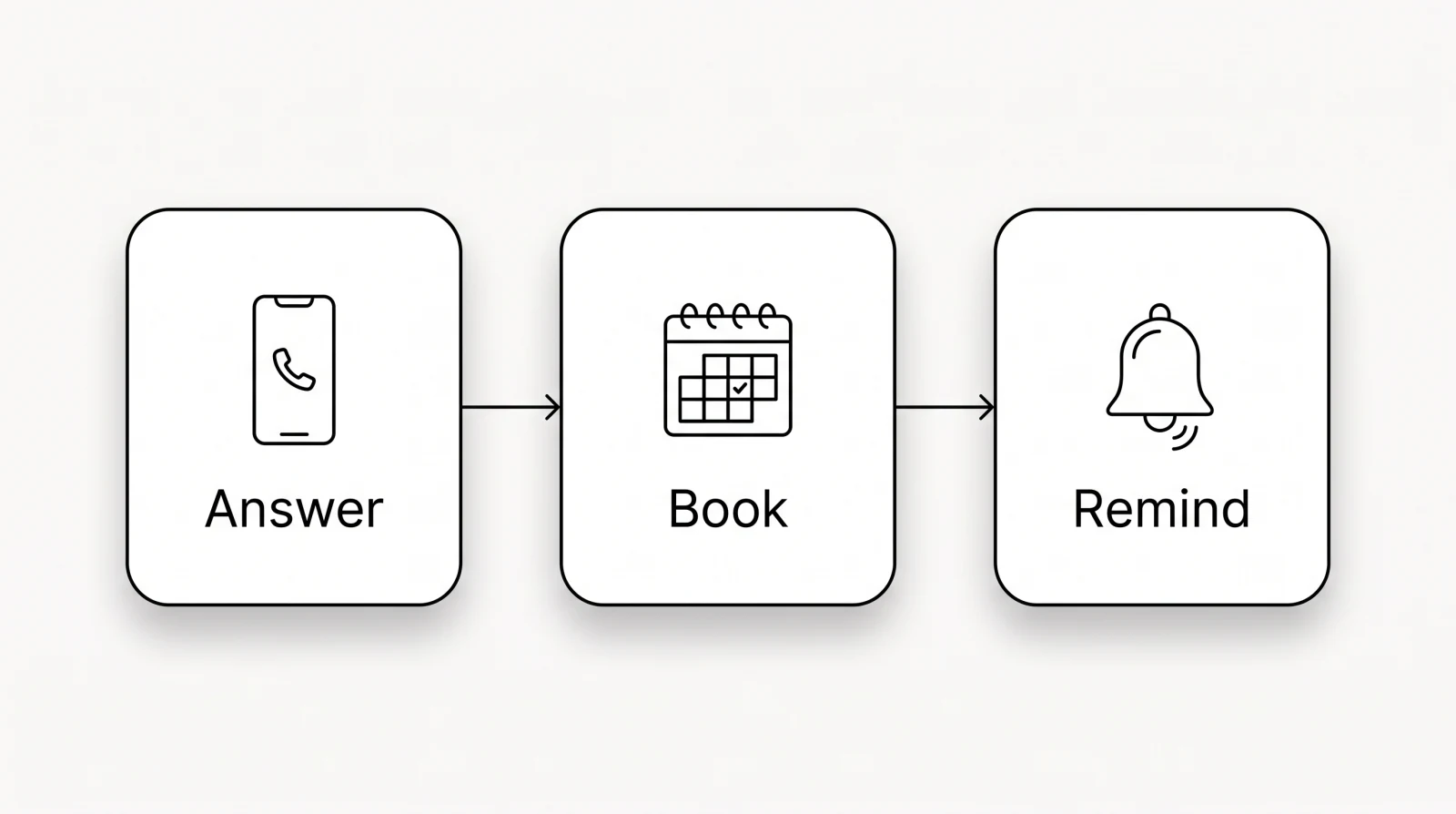
The AI agent picks up every call on the first ring, in a natural voice, and every text within seconds. It can answer common questions (hours, services offered, current specials, whether a vehicle is still available), take down what the customer needs, and move straight into booking. No hold music, no voicemail, no lost lead. This is the core of AI for car dealerships done right: coverage that never has a gap.
Books service appointments and test drives directly into the schedule
Instead of taking a message and hoping someone calls back, the agent checks real availability and books the appointment or test drive directly, the same way a good service advisor would. This is AI appointment scheduling for dealerships at its most practical: the customer hangs up with a confirmed time, and your team sees it appear on the calendar without lifting a finger.
Sends automated reminders that actually cut no-shows
The agent sends confirmation texts and reminder messages ahead of every service appointment or test drive, and can handle reschedules automatically if a customer needs to move their slot. This is straightforward vehicle service shop automation: no advisor has to spend twenty minutes a day manually texting or calling down the appointment list, and empty bays from no-shows drop noticeably.
Follows up on quotes and leads that went cold
Every dealership has a stack of quotes that went out and never got a callback. The AI agent follows up automatically, on a schedule, with a friendly nudge, a reminder of the offer, or an easy way to book. It doesn't get tired of following up and it doesn't forget. Leads that would have gone stale get a second and third touch without anyone on staff having to remember to make the call.
Handles overflow and after-hours without adding headcount
Shoppers browse and search for service centers well outside business hours. An AI agent captures those calls and texts at 8pm on a Sunday just as well as it does at 9am on a Tuesday, and hands your team a ready-to-book lead when they open Monday morning instead of a voicemail nobody gets to.
How to think about ROI
Owners and GMs don't need another dashboard, they need a simple gut-check on whether this pays for itself. Two numbers matter:
- The value of one closed sale or one filled service bay hour. Even a modest vehicle sale or a single hour of billed labor in a service bay is worth far more than a month of automation.
- How many of those you're currently losing to missed calls, no-shows, and dead quotes. Most shops underestimate this because missed calls don't get logged. A rough gut-check: if your team is fielding 20 to 40 calls a day during peak hours, even a 10 percent miss rate is two to four lost opportunities every single day.
Plans with Bez Builder start around $1,000/month equivalent, with custom pricing based on call volume and scope, and systems typically go live in about two weeks. If recovering even one extra sale or a few extra service bay hours a month covers the cost, and the agent is designed to recover far more than that, the ROI case tends to make itself. See pricing for how the plans break down.
Why this matters more for shops than most businesses
Auto dealerships and service shops have a structural disadvantage other businesses don't: staff are physically tied up on the lot or in the bay and cannot realistically be near a phone all day. That's not a training problem or a culture problem, it's the nature of the work. Automation isn't replacing your team's judgment on the floor, it's covering the gap that exists because your best people are busy doing the job that actually makes money, not answering phones.
If you're not sure how much this is actually costing your shop, that's exactly what the Automation Score is built to show. Take the Automation Score and answer a few quick questions about your call volume, missed calls, and hours spent on manual reminders and follow-up, and get a free personalized report on how much opportunity you're leaving on the table.
Frequently asked questions
How much does AI automation cost for a dealership or service shop?
Plans start around $1,000/month equivalent, with custom pricing based on call volume, number of locations, and which workflows you need automated. See pricing for details.
How long does it take to set up?
Most systems go live in about two weeks from kickoff to launch, including integration with your existing phone lines and scheduling software.
Will an AI agent replace my service advisors or sales staff?
No. It handles the calls, texts, and follow-up your team can't get to during busy hours, so advisors and salespeople can focus on customers already in front of them instead of sprinting for the phone.
Can the AI agent actually book into our existing scheduling system?
Yes. The agent checks real-time availability and books appointments and test drives directly into your schedule, rather than just taking a message for someone to call back later.
What happens to calls after hours or on weekends?
The AI agent answers around the clock, so calls and texts that come in after close or on weekends still get handled and booked instead of going to voicemail.
Do we need new phone numbers or hardware?
No. The agent typically integrates with the phone lines and tools you already use, so there's no hardware swap or number change required.
Missed calls and empty service bays are a fixable problem, not a cost of doing business. Take the Automation Score to see exactly how much revenue is on the table, or book a call to talk through what automation would look like for your shop.